

Your Tire's Age Matters More Than Its Tread
A Blowout on I-75
Most of us check tread depth before a long haul. Fewer of us check the date.
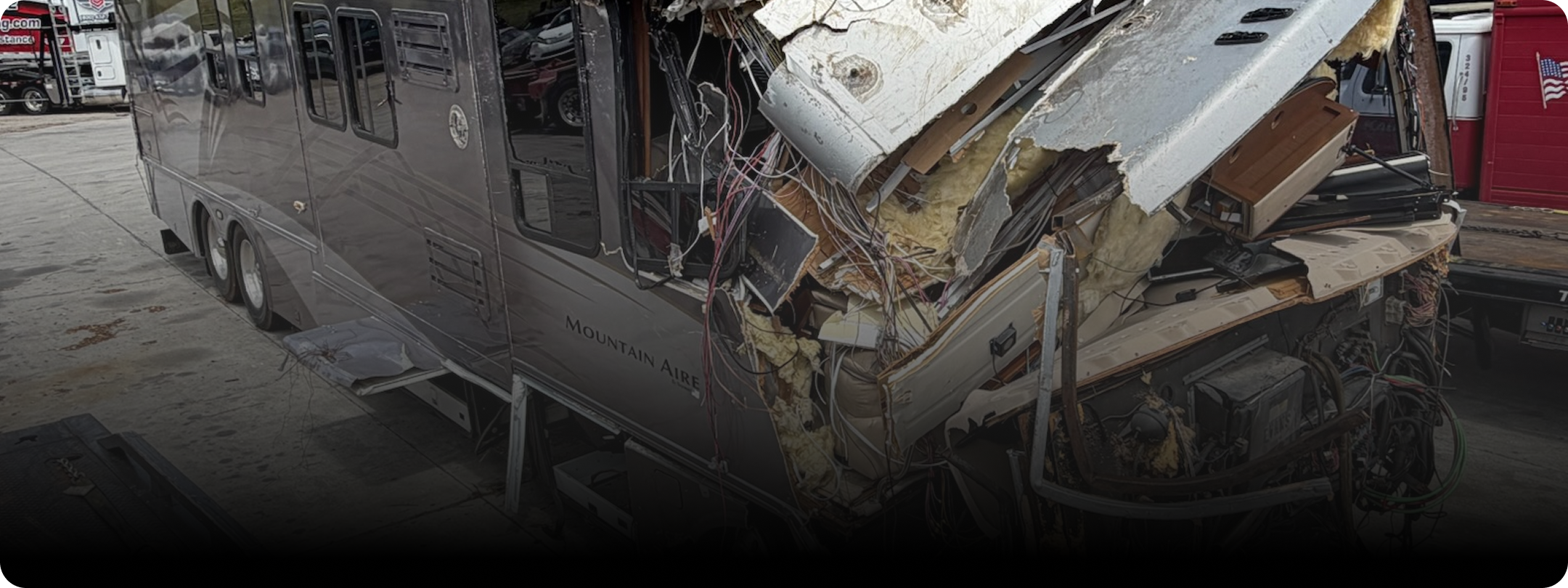
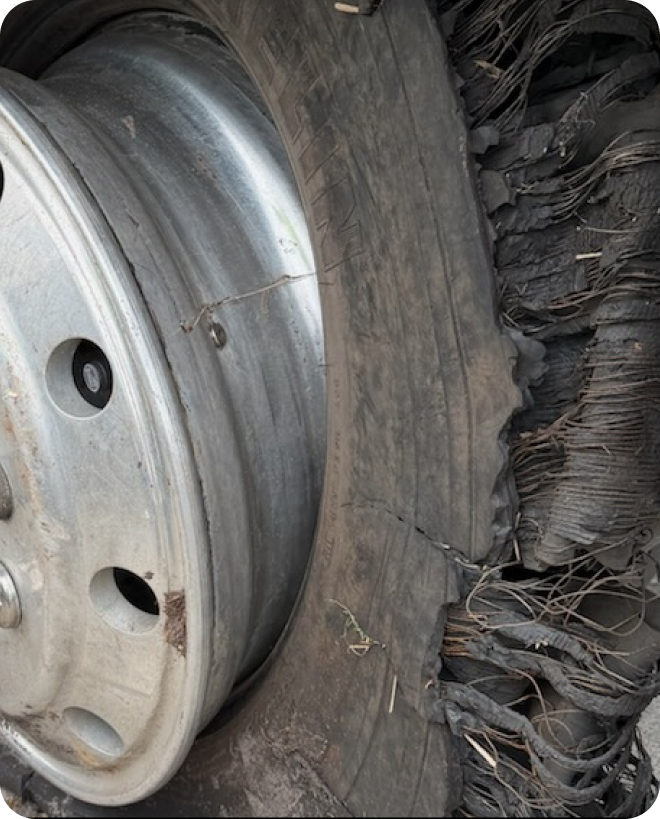
Earlier this year, a fellow RVer's coach went off the shoulder on I-75 when a front tire blew out on the way to Florida. The tires had plenty of tread left, but they were 11 years old and had spent years sitting outside exposed to sun and weather. The blowout sent the RV through roadside brush and into a tree. The impact caused serious injuries requiring major surgery. Thankfully, everyone is recovering.
Rubber doesn't ask permission before it fails. Tread depth isn't the only thing worth checking before your next trip.
Tread Isn't the Whole Story
Rubber degrades with age and UV exposure whether or not the tire has been driven. A tire can look fine and still be dangerously brittle underneath.
How to Check Your Tires' Age
Every tire has a DOT code stamped on the sidewall. The last four digits tell you the week and year it was made, for example, "1116" means the 11th week of 2016. If you can't remember the last time you replaced yours, this is worth five minutes at your next stop.
The General Rule of Thumb
Most manufacturers recommend replacing RV tires every 6 to 10 years regardless of tread depth, and sooner if the coach is stored outside. If you store your rig outdoors, tire covers make a real difference.
It's an easy thing to put off. It's also one of the cheaper problems you'll ever fix compared to the alternative.